High
Home energy in Pennsylvania: prices, who sells you power and what is open
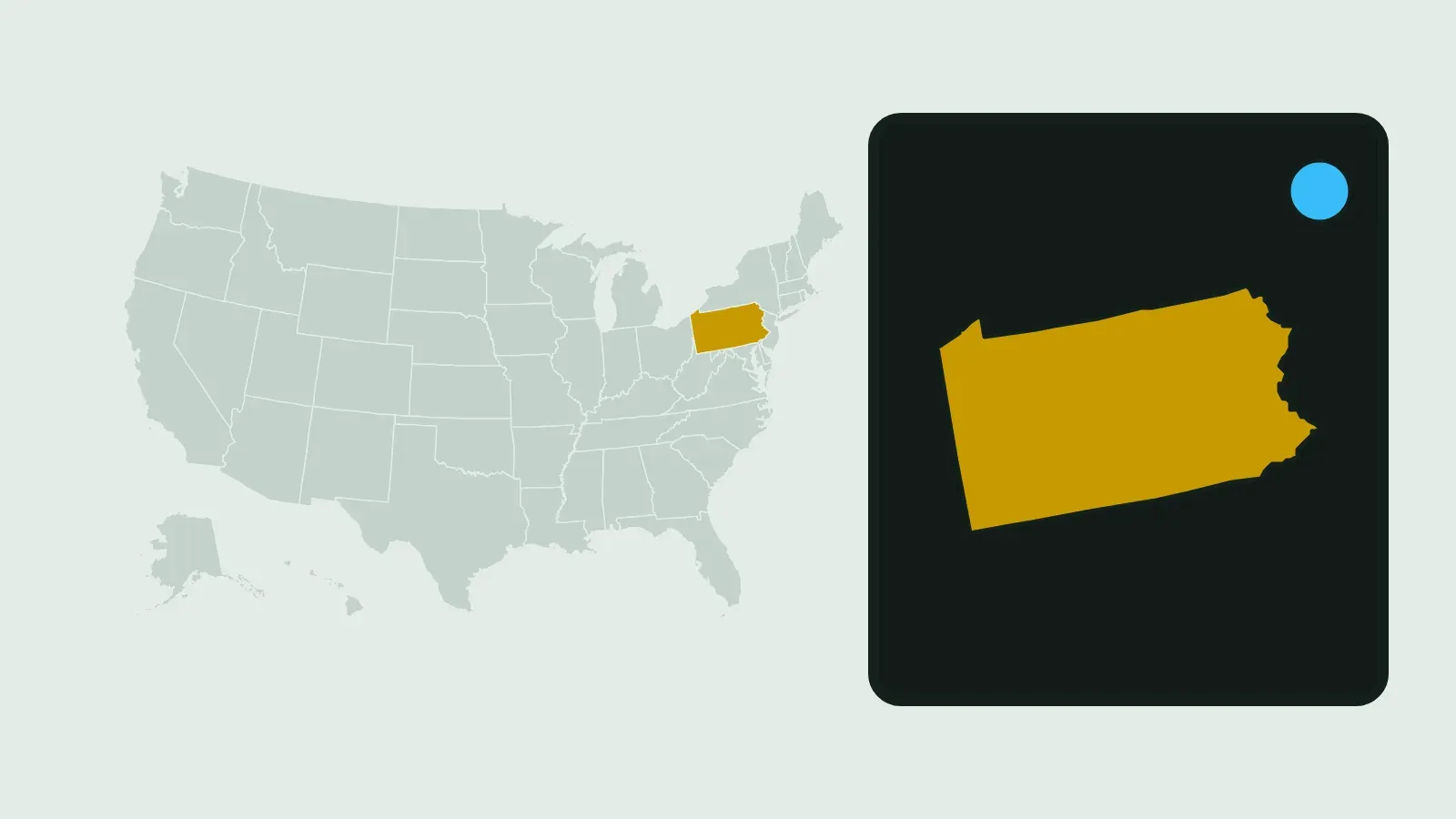
Pennsylvania households can shop for an electricity supplier, utilities must offer net metering for home solar, and the state's federally funded home energy rebates have not launched.
By VoltHearth Editorial Team Updated 6 min read
- Electricity price
- 19.29¢ per kWh
- Natural gas price
- $15.04 per Mcf
- Pick your supplier
- Yes, in most areas
- Net metering
- Yes, at full retail value
At a glance
Pennsylvania households paid an average of 19.29¢ per kWh for electricity in 2025, above the national average, and $15.04 per thousand cubic feet for natural gas, a little below it. You can switch to an electric generation supplier while your local utility keeps delivering the power. Utilities must offer net metering for home solar, and the state's HOMES and HEEHR rebates were still awaiting federal approval on the state's last update, in September 2026.
Pennsylvania at a glance
What Pennsylvanians pay for electricity and gas
The U.S. Energy Information Administration (EIA) reports statewide averages: total residential revenue divided by kilowatt-hours sold, so delivery charges and fees are inside the figure. Your own rate depends on your utility, supplier and plan, so treat these as a yardstick, not a quote.
| Energy | Pennsylvania, 2025 and 2024 | U.S., 2025 and 2024 |
|---|---|---|
| Electricity (¢ per kWh) | 19.29 and 17.77 | 17.23 and 16.48 |
| Natural gas (dollars per Mcf) | 15.04 and 13.62 | 15.34 and 14.50 |
At 19.29¢, a month with 1,000 kWh of use comes to about $192.90. Pennsylvania electricity rose about 9% between 2024 and 2025 (17.77¢ to 19.29¢) and ran about 12% above the U.S. average. Gas rose about 10% but stayed about 2% below the U.S. average. One Mcf holds roughly 10.37 therms, so $15.04 per Mcf is about $1.45 per therm; the kWh, therm and ccf guide explains the units on your bill.
Who sells you electricity
Pennsylvania runs electric choice. You can buy the electricity itself from an electric generation supplier (EGS) instead of your utility, while your electric distribution company (EDC) keeps its own role in delivering it. The Pennsylvania Public Utility Commission (PUC) runs PAPowerSwitch, which it calls the official electric shopping website. You enter a ZIP code to find your EDC, and the site warns that competitive offers may not be available in all areas.
- Where to compare offers: PAPowerSwitch, run by the PUC.
- What switching changes: the supply price and contract terms. Your EDC remains the company named for distribution on your bill.
- What to check first: your utility's current default price, which the PUC site presents as the price to compare, and any cancellation fee or variable-rate clause in a supplier's contract.
Fixed and variable plans, introductory rates and bill credits are easy to misread. The retail choice guide shows how to compare plans on the total bill at your own usage.
Solar panels and what the grid pays you
In testimony to the Pennsylvania House Energy Committee on March 2, 2026, PUC Chairman Stephen DeFrank said that EDCs must offer net metering under the Alternative Energy Portfolio Standards (AEPS) Act, PUC orders and regulations. Customers sell excess energy back at what the testimony calls full retail value, which the Commission interprets as the EDC's price to compare. Suppliers may offer net metering under their private contracts.
The same testimony said the Commission supports legislative updates to the AEPS net metering rules, aimed at keeping benefits for true end-user customers. It did not describe a specific change. The federal tax credit for rooftop solar ended for systems finished after December 31, 2025; what happened to 25C and 25D explains what is left.
Home energy rebates
The Pennsylvania Department of Environmental Protection (DEP) will run two federally funded programs through its Penn Energy Savers Program: HOMES, rebates for whole-home efficiency work, and HEEHR, the statute's name for the electric appliance rebates that many sources call HEAR. DEP's page does not list amounts or income limits; federal rules allow up to $8,000 for HOMES and up to $14,000 per household for the electric appliance rebates.
DEP's page said that as of September 2026 it was awaiting final U.S. Department of Energy approval to launch. The page says DOE released new program guidance on June 1, 2026, and that DEP has been revising its program design since then. No launch date is given. A contractor who says Pennsylvania rebate money is available today is ahead of the state. How the programs work elsewhere is in the HOMES and HEAR guide.
What is distinctive about Pennsylvania's market
Shopping is a large part of the Pennsylvania market. EIA's 2024 state table shows 88.8 million MWh of retail sales by energy-only providers and 53.4 million MWh by full-service providers, across all customer classes. Energy-only sales ranked third among the states. The table does not break those figures out for households, so it describes the whole market, not what a typical home does.
Who to call
- Electricity: the Pennsylvania Public Utility Commission, at 800-692-7380, handles complaints about utilities and suppliers.
- Rebates: the Department of Environmental Protection's Energy Programs Office, at RA-EPHomeEngRebates@pa.gov.
- Your bill: your EDC for outages, meter and net metering paperwork, and your supplier for the supply price.
Quick answers
Can I choose my electricity supplier in Pennsylvania?
Yes, in the areas where competitive offers exist. Enter your ZIP code on PAPowerSwitch, the PUC's shopping site, to find your electric distribution company and the offers listed for it.
Does Pennsylvania have net metering?
Yes. In March 2026 testimony the PUC chairman said electric distribution companies must offer it under the AEPS Act, and that excess energy is credited at full retail value, which the Commission reads as the utility's price to compare.
Are Pennsylvania home energy rebates available now?
Not on the date we checked, November 19, 2026. DEP's page said that as of September 2026 it was awaiting final federal approval and gave no launch date.
Why is my Pennsylvania electricity price above the U.S. average?
EIA's 2025 average for Pennsylvania households was 19.29¢ per kWh against 17.23¢ nationally. The figure includes delivery charges and fees, and your own price depends on your utility, your supplier and your plan.
Sources
- EIA — Electric Power Annual, Table 2.10, average price by state
- EIA — Average residential natural gas price by state
- EIA — Pennsylvania electricity profile (2024 data)
- Pennsylvania PUC — PAPowerSwitch, the official electric shopping website
- Pennsylvania PUC — Testimony of Chairman Stephen M. DeFrank on net metering (March 2, 2026)
- Pennsylvania DEP — Home energy rebates and the Inflation Reduction Act
Prices are EIA statewide averages. Facts on this page were checked against these sources on November 19, 2026. The DEP page carries no revision date; its latest dated reference is September 2026. Rebate programs and utility policies change; confirm with your utility and DEP before you act.
Read next
-
Bill guide
Retail choice plans
What you can switch when you pick an electricity supplier, plan types, and how to compare offers.
-
Credits and rebates
HOMES and HEAR rebates
State-run DOE rebates and the May 2026 rule changes. Status differs by state.
-
State reading
Ohio
16.90¢ per kWh; you can shop for supply; solar credit at the energy rate; rebate status unconfirmed.