Low
Home energy in Nevada: prices, net metering tiers and rebates
Nevada electricity and gas prices both fell in 2025, and both sit below the U.S. average. New solar customers earn 75% of the retail rate for exports, and the state's rebates are not open.
By VoltHearth Editorial Team Updated 6 min read
- Electricity price
- 13.26¢ per kWh
- Natural gas price
- $13.14 per Mcf
- Pick your supplier
- Not confirmed
- Net metering
- 75% of retail rate
At a glance
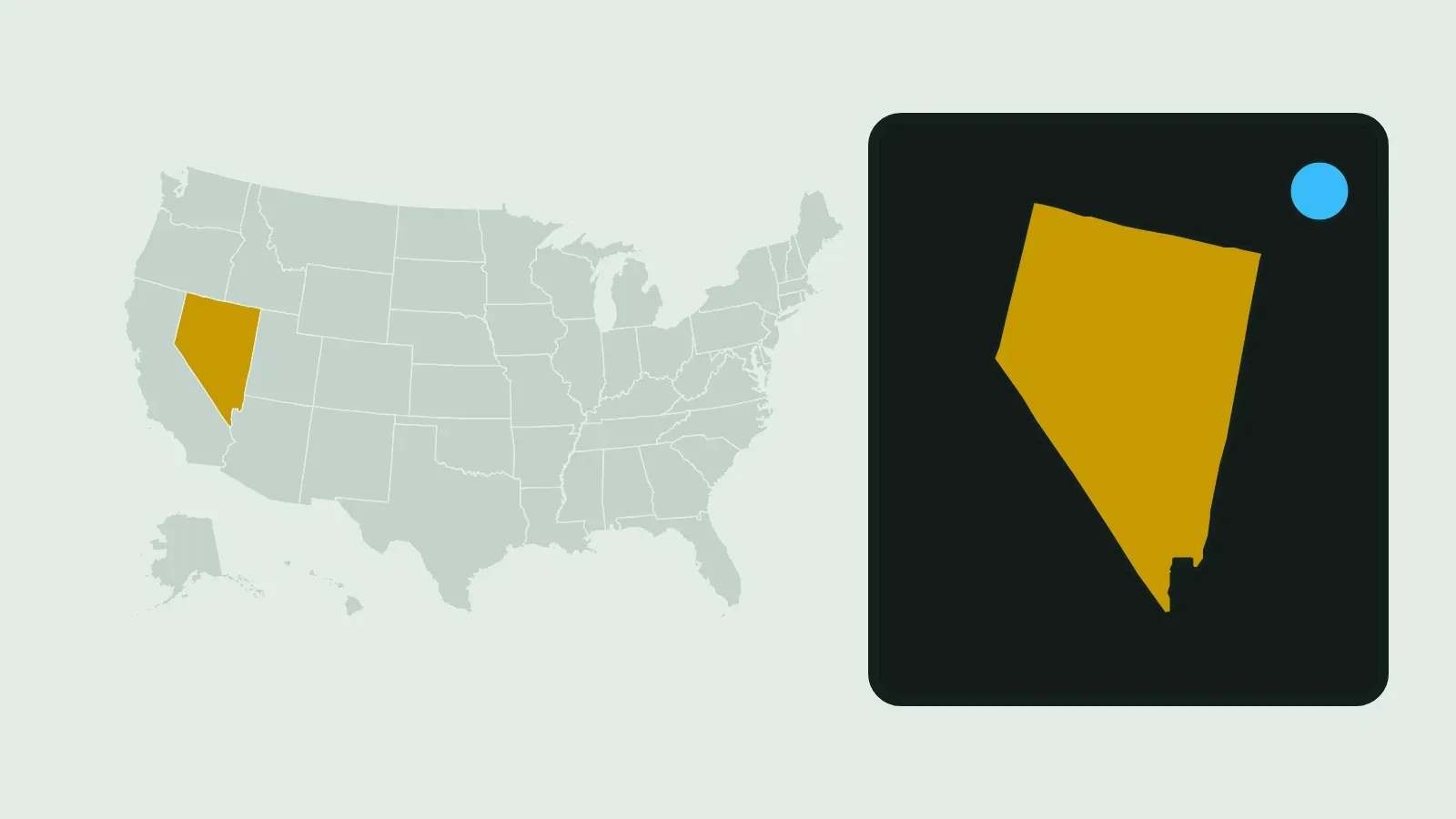
Nevada households paid an average of 13.26¢ per kWh for electricity in 2025, about 12% less than in 2024 and below the national average, and $13.14 per thousand cubic feet for natural gas, about 30% less than in 2024. Under a 2017 state law, new net metering customers (systems of 25 kW or less) earn 75% of the retail rate for exports, locked for 20 years. The Governor's Office of Energy lists HOMES and HEAR as not open, pending federal review.
Nevada at a glance
What Nevadans pay for electricity and gas
The U.S. Energy Information Administration (EIA) reports statewide averages: total residential revenue divided by kilowatt-hours sold, so delivery charges and fees are inside the figure. Your own rate depends on your utility and rate plan, so treat these as a yardstick, not a quote.
| Energy | Nevada 2025 | Nevada 2024 | U.S. 2025 |
|---|---|---|---|
| Electricity (¢ per kWh) | 13.26 | 15.00 | 17.23 |
| Natural gas (dollars per Mcf) | 13.14 | 18.69 | 15.34 |
At 13.26¢, a month with 1,000 kWh of use comes to about $133. Nevada is unusual here: the average electricity price fell about 12% between 2024 and 2025 (15.00¢ to 13.26¢) while most states' prices rose, and it sits about 23% below the U.S. average. Gas fell about 30%, from $18.69 to $13.14 per Mcf, and is about 14% below the U.S. average. One Mcf holds roughly 10.37 therms, so $13.14 per Mcf is about $1.27 per therm; the kWh, therm and ccf guide explains the units on your bill.
Who sells you electricity
NV Energy describes itself as serving about 2.4 million electric customers across more than 44,000 square miles of Nevada, plus natural gas customers in the Reno-Sparks area. The Public Utilities Commission of Nevada (PUCN) regulates electric, natural gas, water and telecom utilities.
VoltHearth could not confirm from a state source whether homes can pick a different electricity supplier. Your bill names your utility; ask the PUCN before agreeing to an offer to switch. For how retail choice works in states that have it, see the retail choice guide.
Solar panels and what the grid pays you
Nevada's net metering rates come from Assembly Bill 405 (2017), in effect since June 15, 2017. The PUCN says they apply to renewable systems of 25 kilowatts or less, typical of rooftop solar. Excess energy earns bill credits that apply in a later billing period, and net metering customers stay in the same customer class, paying the same basic service charge and fees as other customers.
| Tier | Export rate, share of retail | Status |
|---|---|---|
| Tier 1 | 95% | Closed; reached 80 MW in August 2018 |
| Tier 2 | 88% | Open August 2018 to June 2019 |
| Tier 3 | 81% | Open June 2019 to June 2020 |
| Tier 4 | 75% | Open, no capacity limit |
Each customer keeps the rate of the tier they signed up under for 20 years at the original installation location, and the Tier 4 rate stays at 75% unless the Legislature changes it. As of October 15, 2025 the PUCN showed 697.570 MW installed and 11.827 MW applied for under Tier 4.
The federal tax credit for rooftop solar ended for systems finished after December 31, 2025; see what happened to 25C and 25D.
Home energy rebates
The Nevada Governor's Office of Energy (GOE) will run the federal HOMES and HEAR rebates. Nevada is eligible for $48,200,980 for HOMES and $47,920,160 for HEAR. The office's pages show neither program open and list the project launch as "Pending federal review and program guidance", with the date to be determined. One page lists its last update as December 31, 2025.
The same pages show the office named a needs assessment vendor in February 2024 and received early administrative funds in March 2024. A VEIC announcement (undated) says Everblue, APTIM and VEIC will administer the programs, but its expected early 2025 launch has passed. Ask GOE at Info@energy.nv.gov or 775-687-7189 for the current status before you plan work around a rebate. How the programs work is in the HOMES and HEAR guide.
Who to call
- Electricity and gas: the Public Utilities Commission of Nevada.
- Rebates: the Nevada Governor's Office of Energy.
- Your own rate and solar credit: your utility's current tariff.
Quick answers
Can I choose my electricity provider in Nevada?
VoltHearth could not confirm a retail choice program for homes from a state source. Your bill names your utility; the PUCN can answer supplier questions.
Does Nevada have net metering?
Yes. Under AB 405, new customers with systems of 25 kW or less earn 75% of the retail rate for exports (Tier 4), and keep that rate for 20 years. Ask NV Energy whether newer rate design changes affect your address.
Are Nevada home energy rebates available now?
No. The Governor's Office of Energy pages show HOMES and HEAR as not open, with the launch pending federal review and program guidance.
Why did Nevada prices fall in 2025?
EIA's averages for Nevada households fell from 15.00¢ to 13.26¢ per kWh and from $18.69 to $13.14 per Mcf. EIA reports the figures but not the reasons, and the sources reviewed for this page do not give them.
Sources
- EIA — Electric Power Annual, Table 2.10, average price by state
- EIA — Average residential natural gas price by state
- PUCN — Net metering in Nevada
- Public Utilities Commission of Nevada
- Nevada Governor's Office of Energy — Home energy rebates program
- Nevada Governor's Office of Energy — Home efficiency rebates program
- VEIC — Implementing Nevada's home energy rebate programs
- NV Energy
Prices are EIA statewide averages. Facts on this page were checked against these sources on November 19, 2026. The PUCN net metering page shows capacity data as of October 15, 2025. Rebate programs and utility policies change; confirm with your utility and the Governor's Office of Energy before you act.
Read next
-

Bill guide
Net metering
How exported solar power is credited on a bill, how net billing differs, and where to find your rule.
-

Upgrade
Rooftop solar
What a system makes, how exports are credited, and how to work out payback without the 25D credit.
-
State reading
Arizona
15.26¢ per kWh; utility-set rates; yearly solar export rate; home energy rebates paused in 2025.