High
Home energy in Michigan: prices, who sells you power and what is open
Michigan electricity costs more than the U.S. average and gas costs less. Choice of supplier is limited, solar exports run through a distributed generation program, and the state's rebates are partly open.
By VoltHearth Editorial Team Updated 6 min read
- Electricity price
- 20.03¢ per kWh
- Natural gas price
- $10.92 per Mcf
- Pick your supplier
- Business only, capped
- Net metering
- Distributed generation
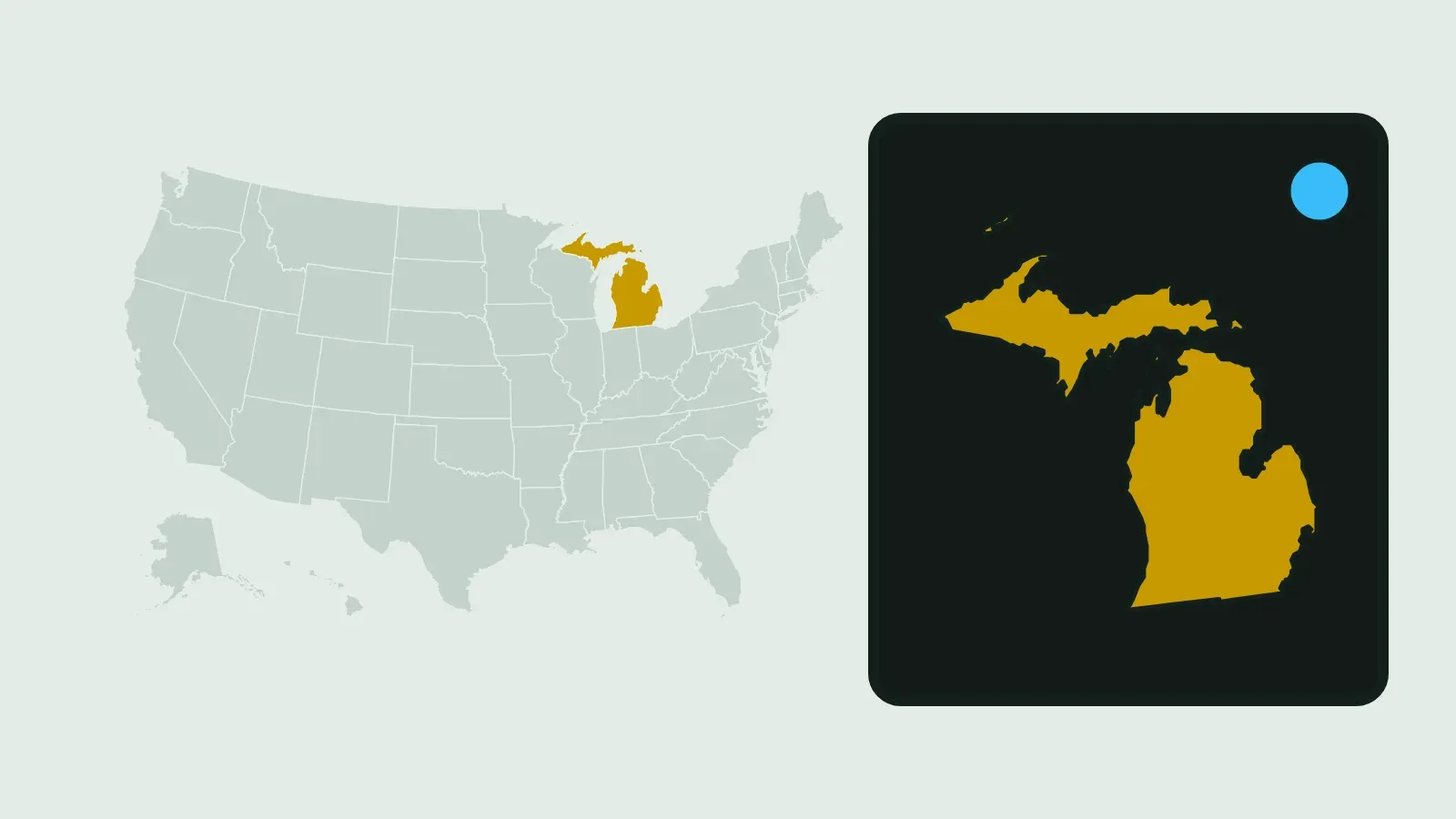
At a glance
Michigan households paid an average of 20.03¢ per kWh for electricity in 2025, above the national average, and $10.92 per thousand cubic feet for natural gas, below it. Electric choice exists in law but is capped at 10% of a utility's sales and, per the Michigan Public Service Commission, no licensed supplier is currently enrolling homes. Rooftop solar runs through a distributed generation program, and the state's MiHER rebates are open in part: new income-qualified applications are paused in five districts.
Michigan at a glance
What Michiganders pay for electricity and gas
The U.S. Energy Information Administration (EIA) reports statewide averages: total residential revenue divided by kilowatt-hours sold, so delivery charges and fees are inside the figure. Your own rate depends on your utility and rate plan, so treat these as a yardstick, not a quote.
| Energy | Michigan 2025 | Michigan 2024 | U.S. 2025 |
|---|---|---|---|
| Electricity (¢ per kWh) | 20.03 | 19.30 | 17.23 |
| Natural gas (dollars per Mcf) | 10.92 | 10.76 | 15.34 |
At 20.03¢, a month with 1,000 kWh of use comes to about $200. Michigan electricity rose about 4% between 2024 and 2025 (19.30¢ to 20.03¢) and sits about 16% above the U.S. average. Gas runs the other way: Michigan households paid about 29% less per Mcf than the U.S. average. One Mcf holds roughly 10.37 therms, so $10.92 per Mcf is about $1.05 per therm; the kWh, therm and ccf guide explains the units on your bill.
Who sells you electricity
Michigan's electric choice program lets some customers buy power from a licensed alternative electric supplier instead of the utility. It is narrow. Under state law, no more than 10% of a utility's average weather adjusted retail sales for the prior year can take supplier service at one time, and new customers wait in a queue once the cap is full.
- Who it covers: the Michigan Public Service Commission (MPSC) says business customers of Consumers Energy, DTE Electric, Upper Peninsula Power Company, Upper Michigan Energy Resources and Cloverland Electric Cooperative can choose a supplier or stay on the utility's regulated rates.
- Homes: the MPSC says no licensed supplier is currently marketing to or enrolling residential customers, so most households buy from the utility that serves their address.
- Size of the queue: as of December 2024 roughly 6,000 accounts took supplier service (about 2,187 MW) and about 5,899 accounts were queued statewide.
If you ever see a supplier offer, compare the total bill, not the headline rate. The retail choice guide shows how.
Solar panels and what the grid pays you
Michigan runs rooftop solar through a distributed generation (DG) program set by the MPSC. Public Act 235 of 2023 took effect February 27, 2024. The MPSC lists the eligible size as up to 110% of your electricity use over the prior 12 months, with part of each utility's program cap reserved for systems under 20 kW. Each utility filed an updated DG tariff, and the Commission approved them on March 13, 2025.
The federal tax credit for rooftop solar ended for systems finished after December 31, 2025. What happened to 25C and 25D explains what is left.
Home energy rebates
Michigan's HOMES and HEAR rebates run together as the Michigan Home Energy Rebates program (MiHER), administered by the Department of Environment, Great Lakes, and Energy (EGLE). Michigan received $105.7 million for HOMES and $105.3 million for HEAR. HEAR is limited to households at or below 150% of area median income, and work must be done by an approved MiHER registered contractor.
In an August 20, 2026 update, EGLE said applications were being accepted from low-to-moderate-income residents statewide, while approvals in the Detroit district were paused as single-family projects neared the funding cap. The state's program page lists new income-qualified applications as unavailable in the Detroit, Warren, Grand Rapids, Lansing and Kalamazoo districts until capacity is confirmed. Amounts depend on income, the upgrades and modeled savings. How the programs work is in the HOMES and HEAR guide.
Who to call
- Electricity: the Michigan Public Service Commission oversees electric choice and the distributed generation program.
- Rebates: MiHER, run by EGLE, at 855-510-7080 or MiEnergyRebates@CLEAResult.com.
- Your own rate: your utility's tariff, which names your plan and its charges.
Quick answers
Can I choose my electricity provider in Michigan?
Not in practice if you are a homeowner. Michigan law lets some business customers buy from a licensed alternative supplier, capped at 10% of a utility's sales, and the MPSC says no supplier is currently enrolling residential customers.
Does Michigan have net metering?
Michigan has a distributed generation program under Public Act 235 of 2023, with utility tariffs approved on March 13, 2025. The credit rate for exports is set in your utility's tariff, so ask for it before you sign.
Are Michigan home energy rebates available now?
Partly. MiHER is accepting applications in much of the state, but new income-qualified applications were paused in five EGLE districts. Check the state's program page before you plan work around a rebate.
Why is Michigan electricity above the U.S. average?
EIA's 2025 average for Michigan households was 20.03¢ per kWh against 17.23¢ nationally. The figure blends generation, delivery and fees across every utility in the state, and your own bill depends on your utility's rate plan.
Sources
- EIA — Electric Power Annual, Table 2.10, average price by state
- EIA — Average residential natural gas price by state
- Michigan Public Service Commission — Electric choice
- Michigan Public Service Commission — Distributed generation
- Michigan Public Service Commission — Distributed generation and interconnection (2023 energy legislation)
- Michigan EGLE — Michigan Home Energy Rebates
- Michigan EGLE — MiHER update (August 20, 2026)
Prices are EIA statewide averages. Facts on this page were checked against these sources on November 19, 2026. Rebate programs and utility policies change; confirm with your utility and the MiHER program before you act.
Read next
-
Bill guide
Retail choice plans
What you can switch when you pick an electricity supplier, plan types, and how to compare offers.
-
Credits and rebates
HOMES and HEAR rebates
State-run DOE rebates and the May 2026 rule changes. Status differs by state.
-
State reading
Ohio
16.90¢ per kWh; you can shop for supply; solar credit at the energy rate; rebate status unconfirmed.