High
Home energy in Illinois: prices, who sells you power and what is open
Illinois electricity is a little above the U.S. average and gas is well below it. You can shop for a supplier, solar credits changed on January 1, 2025, and the state's federal home rebates have not launched.
By VoltHearth Editorial Team Updated 6 min read
- Electricity price
- 17.67¢ per kWh
- Natural gas price
- $11.25 per Mcf
- Pick your supplier
- Yes, ComEd and Ameren
- Net metering
- Supply-only since 2025
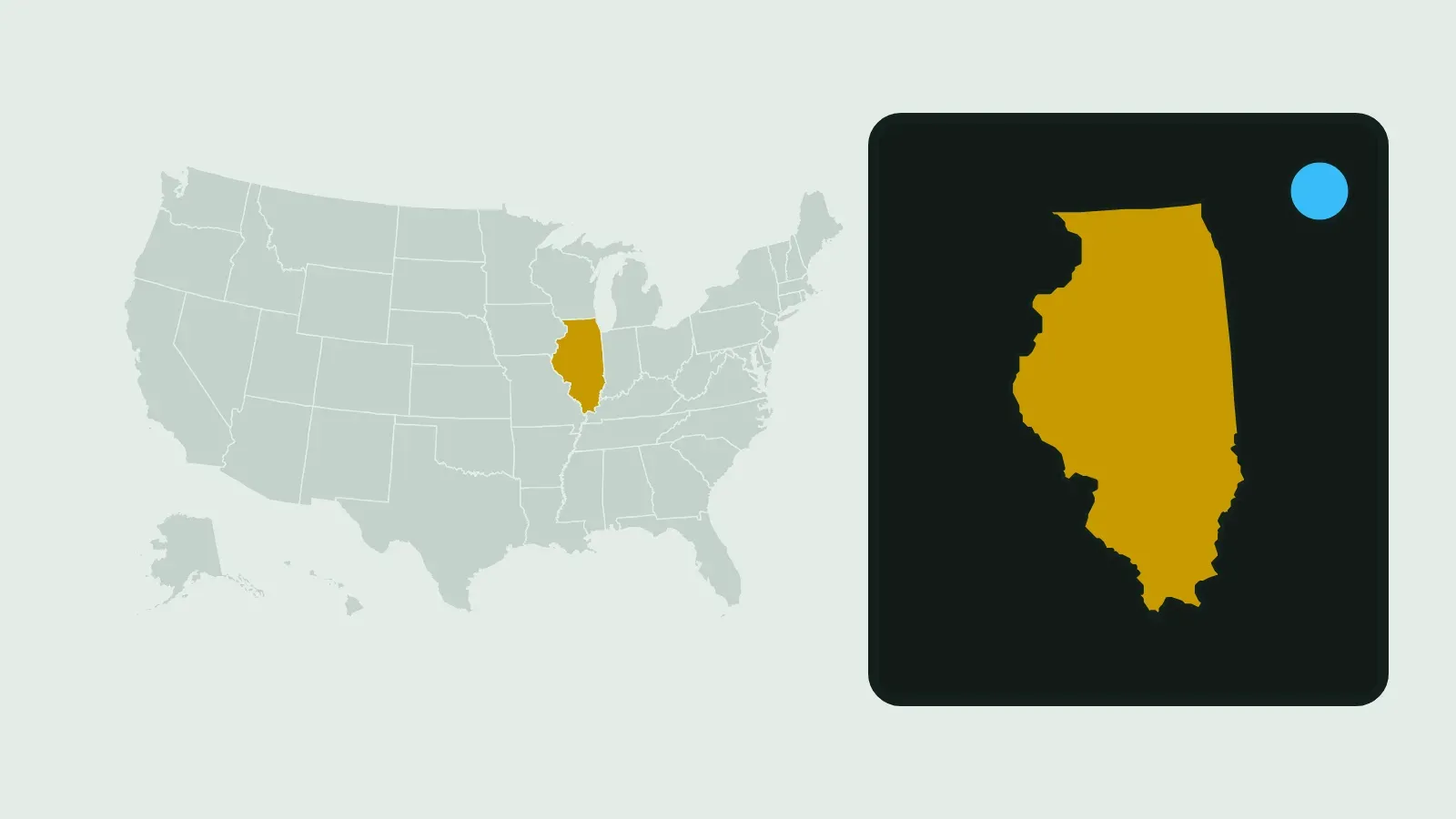
At a glance
Illinois households paid an average of 17.67¢ per kWh for electricity in 2025, about 3% above the national average, and $11.25 per thousand cubic feet for natural gas, about 27% below it. The Illinois Commerce Commission runs an electric choice site for ComEd and Ameren Illinois customers. Since January 1, 2025, new solar customers of ComEd, Ameren and MidAmerican get supply-only net metering, and the state's HOMES and HEAR launch was pending federal approval on the Illinois EPA's page.
Illinois at a glance
What Illinoisans pay for electricity and gas
The U.S. Energy Information Administration (EIA) reports statewide averages: total residential revenue divided by kilowatt-hours sold, so delivery charges and fees are inside the figure. Your own rate depends on your utility, supplier and plan, so treat these as a yardstick, not a quote.
| Energy | Illinois 2025 | Illinois 2024 | U.S. 2025 |
|---|---|---|---|
| Electricity (¢ per kWh) | 17.67 | 15.87 | 17.23 |
| Natural gas (dollars per Mcf) | 11.25 | 11.11 | 15.34 |
At 17.67¢, a month with 1,000 kWh of use comes to about $177. Illinois electricity rose about 11% between 2024 and 2025 (15.87¢ to 17.67¢) and now sits about 3% above the U.S. average. Gas ran about 27% below the U.S. average and moved little from 2024. One Mcf holds roughly 10.37 therms, so $11.25 per Mcf is about $1.08 per therm; the kWh, therm and ccf guide explains the units on your bill.
Who sells you electricity
The Illinois Commerce Commission (ICC) runs Plug In Illinois, which it calls the official electric choice website. Customers can buy supply from an alternative retail electric supplier (ARES) instead of taking the utility's supply. The ICC site says about 1.13 million residential customers use an ARES, and it gives no date for that figure. - list: - "Price to compare: the site has separate pages for ComEd and Ameren Illinois that explain the utility's supply price, which is the number to compare an offer against." - "Municipal aggregation: the site lets you check whether your community has specific rate offers." - "Switching safely: the ICC's consumer protection pages include how to cancel an agreement with an ARES."
Compare on the total bill at your own usage, not the headline rate. The retail choice guide shows how.
Solar panels and what the grid pays you
Illinois changed net metering for residential and small commercial solar customers of ComEd, Ameren and MidAmerican effective January 1, 2025. The Illinois Shines FAQ, dated July 26, 2024, says rural electric cooperatives and municipal utilities may use different rules.
- Before: full retail rate net metering, where excess power sent to the grid is netted against power you pull.
- After: supply-only net metering. The FAQ says, "With supply-only net metering, electric delivery charges are no longer included in net metering." Customers who start net metering on or after January 1, 2025 get supply-only credits.
- Grandfathering: ComEd and Ameren customers interconnected before January 1, 2025 who did not request a distributed generation rebate keep full retail rate net metering for the life of the system. Material changes can end it. MidAmerican customers who applied before January 1, 2025 also keep it.
- Rebate trade-off: requesting the Distributed Generation rebate, also called the Smart Inverter rebate, removes a system from grandfathered status.
The federal tax credit for rooftop solar ended for expenditures made after December 31, 2025. What happened to 25C and 25D explains what is left.
Home energy rebates
The Illinois EPA's Office of Energy received $263 million from the Department of Energy for HOMES and HEAR. The page says the Illinois Department of Commerce and Economic Opportunity (DCEO) will implement HOMES, with a pilot planned for two local administering agencies, and that "the program launch is pending USDOE approval." For HEAR, the page says the state's application "has not yet been processed by USDOE or provided to Illinois EPA for administration or distribution." It gives no launch date.
- Who goes first: initially, 100% of rebate funds go to low-income households, defined as under 80% of area median income.
- Multifamily: at least 10% of funds are planned for low-income multifamily buildings, and the page says the share will likely be higher.
- No back-pay: the page says Illinois does not intend to offer retroactive rebates, so work finished before launch will not be reimbursed.
The page points to help that exists now: your electric or gas utility's rebates, the DCEO Illinois Home Weatherization Program and the Low Income Home Energy Assistance Program. See the HOMES and HEAR guide and the utility rebates guide.
Who to call
- Electricity: the Illinois Commerce Commission, which runs the Plug In Illinois electric choice site.
- Rebates: the Illinois EPA Office of Energy at EPA.EnergyRebates@Illinois.gov, with DCEO implementing HOMES.
- Solar paperwork: your utility, which takes the certificate of completion or application for net metering.
Quick answers
Can I choose my electricity supplier in Illinois?
Yes. The ICC's Plug In Illinois site says customers can use an alternative retail electric supplier, and it has price-to-compare pages for ComEd and Ameren Illinois and a municipal aggregation lookup. Compare the total bill, not only the per-kWh rate.
Does Illinois still have net metering?
Yes, but customers who started on or after January 1, 2025 get supply-only net metering from ComEd, Ameren and MidAmerican, which leaves delivery charges outside the netting. Customers interconnected earlier can keep full retail rate net metering under the FAQ's grandfathering rules.
Are Illinois home energy rebates available now?
Not according to the Illinois EPA page, which says the HOMES launch is pending USDOE approval and gives no date. The page says Illinois does not plan retroactive rebates, so do not start work expecting one.
Why did Illinois electricity prices rise in 2025?
EIA's averages show 15.87¢ per kWh in 2024 and 17.67¢ in 2025, about 11% higher. EIA's figure blends supply, delivery and fees, and the sources used here do not break down the cause.
Sources
- EIA — Electric Power Annual, Table 2.10, average price by state
- EIA — Average residential natural gas price by state
- Illinois Commerce Commission — Plug In Illinois, the official electric choice website
- Illinois Shines — FAQs related to changes in net metering in Illinois, consumers (July 26, 2024)
- Illinois EPA — Energy rebates (HOMES and HEAR)
Prices are EIA statewide averages. Facts on this page were checked against these sources on November 19, 2026. Rebate programs and utility policies change; confirm with your utility and the Illinois EPA before you act.
Read next
-
Bill guide
Retail choice plans
What you can switch when you pick an electricity supplier, plan types, and how to compare offers.
-
Bill guide
Net metering
How exported solar power is credited on a bill, how net billing differs, and where to find your rule.
-
State reading
Indiana
15.96¢ per kWh; solar exports paid a wholesale-based rate; Indiana Energy Saver rebates listed as open.