Moderate
Home energy in Georgia: prices, who sells you power and what is open
Georgia electricity costs less than the U.S. average and gas costs more. The state commission froze Georgia Power rates through 2028, gas customers can use marketers, and one home rebate program reopened in limited form.
By VoltHearth Editorial Team Updated 6 min read
- Electricity price
- 14.74¢ per kWh
- Natural gas price
- $20.42 per Mcf
- Pick your supplier
- Natural gas marketers
- Net metering
- Georgia Power netting
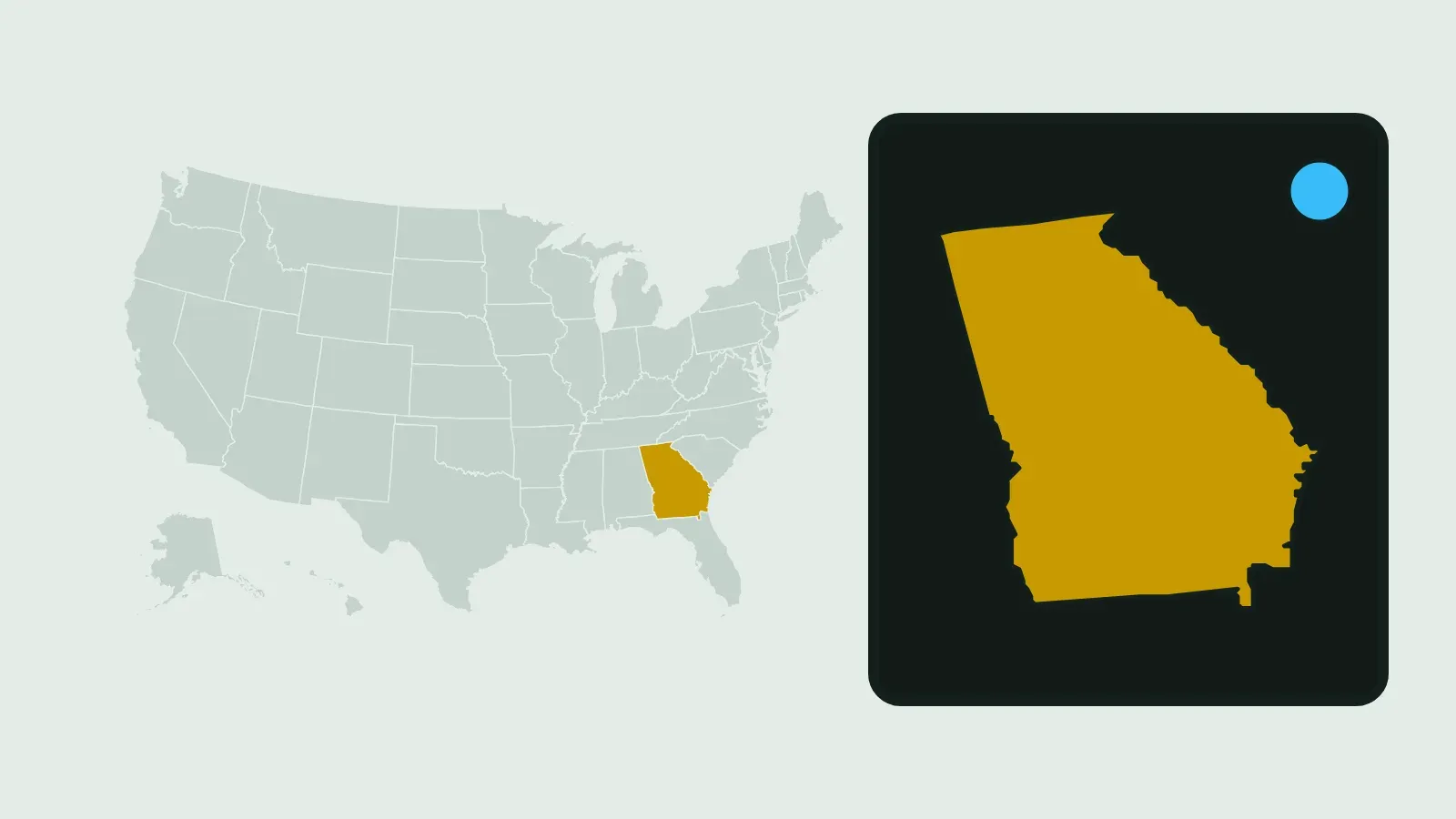
At a glance
Georgia households paid an average of 14.74¢ per kWh for electricity in 2025, below the national average, and $20.42 per thousand cubic feet for natural gas, above it. The Public Service Commission says it froze Georgia Power rates through the end of 2028. Natural gas customers can compare PSC-approved marketers. Georgia Power credits rooftop solar through netting tariffs, and the state's HEAR rebate for single-family homes has reopened with limited measures.
Georgia at a glance
What Georgians pay for electricity and gas
The U.S. Energy Information Administration (EIA) reports statewide averages: total residential revenue divided by kilowatt-hours sold, so delivery charges and fees are inside the figure. Your own rate depends on your utility, rate plan and season, so treat these as a yardstick, not a quote.
| Energy | Georgia 2025 | Georgia 2024 | U.S. 2025 |
|---|---|---|---|
| Electricity (¢ per kWh) | 14.74 | 14.08 | 17.23 |
| Natural gas (dollars per Mcf) | 20.42 | 18.19 | 15.34 |
At 14.74¢, a month with 1,000 kWh of use comes to about $147. Georgia electricity rose about 5% between 2024 and 2025 (14.08¢ to 14.74¢) and sits about 14% below the U.S. average. Gas is the reverse: Georgia households paid about 33% more per Mcf than the U.S. average, and about 12% more than in 2024. One Mcf holds roughly 10.37 therms, so $20.42 per Mcf is about $1.97 per therm; the kWh, therm and ccf guide explains the units on your bill.
Who sells you electricity and gas
For electricity, the utility that serves your address sets what you pay, under rules the Georgia Public Service Commission (PSC) oversees. The PSC's electric pages point to Georgia Power's rules and regulations for retail electric service and to a Georgia Power bill calculator. Check the name at the top of your bill to see who your utility is.
Natural gas works differently. The PSC lists a section on natural gas competition, approved natural gas marketers, a scorecard and price lists for those marketers, and a regulated provider option. Check that list before you accept a marketer's offer. The retail choice guide shows how to compare plans on the total bill rather than the headline rate.
Solar panels and what the grid pays you
Georgia Power describes its solar customer options as netting tariffs, not as a program called net metering. A Georgia Power solar FAQ from 2021 lists three. Monthly Netting offsets your use for the month and credits generation beyond your use at the annual Solar Avoided Energy Cost Rate. Instantaneous Netting is where projects go once Monthly Netting is full. Energy Offset Only gives no credit for exported energy.
- Cap on Monthly Netting: the 2021 document says first come, first served, limited to 5,000 participants or an additional 32 megawatts of capacity, whichever comes first.
- Size limits: residential systems up to 10 kW AC and commercial systems up to 250 kW AC under Monthly Netting.
- Date of the source: the FAQ has no stated date but refers to July and August 2021 changes, so confirm today's terms.
The federal tax credit for rooftop solar ended for expenditures made after December 31, 2025. What happened to 25C and 25D explains what is left.
Home energy rebates
The Georgia Environmental Finance Authority (GEFA) runs the state's federally funded home energy rebates. Its page names two programs, Home Efficiency Rebates (HER, the whole-home program this site calls HOMES) and Home Electric Appliance Rebates (HEAR). Rebate levels depend on household income and expected energy savings, and the page says eligible households can get up to $16,000 in savings.
On its page, GEFA says HEAR for single-family homes "has reopened with limited measures" and links to a program updates page. The page shows no date for the reopening and does not say whether HER is open, so check the current status before you plan work around a rebate. How the programs work is in the HOMES and HEAR guide.
Georgia Power rate freeze
The PSC's website says that "in July 2025, the PSC Commissioners instituted a Georgia Power rate freeze through the end of 2028." It also says rules adopted in 2024 and 2025 are meant to keep residents and small businesses from seeing increases on their power bills because of data centers. The page does not say which charges the freeze covers, so read the commission's order or ask the PSC before assuming every line of your bill is held steady.
Who to call
- Electricity and natural gas: the Georgia Public Service Commission, which lists electric, natural gas and telecommunications among the services it oversees.
- Rebates: the Georgia Environmental Finance Authority, through its home energy rebates page.
- Your own rate: your utility's tariff, or your gas marketer's contract if you use one.
Quick answers
Can I choose my electricity or gas provider in Georgia?
For natural gas, the PSC lists approved marketers you can compare. For electricity, the utility serving your address sets your rate under PSC oversight, and the name of your utility is at the top of your bill.
Does Georgia have net metering?
Georgia Power offers solar netting tariffs. A 2021 company FAQ described Monthly Netting with a cap of 5,000 participants or 32 megawatts, and excess credited at an avoided-cost rate. Ask your utility for today's tariff.
Are Georgia home energy rebates available now?
Partly. GEFA's page says HEAR for single-family homes reopened with limited measures. It does not state whether HER is open and shows no date, so confirm on the GEFA page before you start work.
Is my Georgia Power rate frozen?
The PSC says it froze Georgia Power rates through the end of 2028. Its page does not detail which charges are covered, so check the commission's order for the specifics.
Sources
- EIA — Electric Power Annual, Table 2.10, average price by state
- EIA — Average residential natural gas price by state
- Georgia Public Service Commission — home page (electric, natural gas, rate freeze)
- Georgia Public Service Commission — Consumer Solar Information Portal
- Georgia Power — behind-the-meter solar FAQ (2021)
- Georgia Environmental Finance Authority — home energy rebates
Prices are EIA statewide averages. Facts on this page were checked against these sources on November 19, 2026. Rebate programs and utility policies change; confirm with your utility and GEFA before you act.
Read next
-
Bill guide
Retail choice plans
What you can switch when you pick an electricity supplier, plan types, and how to compare offers.
-
Credits and rebates
HOMES and HEAR rebates
State-run DOE rebates and the May 2026 rule changes. Status differs by state.
-
State reading
Florida
15.21¢ per kWh; net metering for investor-owned utilities; federal rebates not yet launched.